

Now, a Fred Hutchinson Cancer Research Center study on Yup’ik Eskimos living in the remote Yukon Kuskokwim Delta region of southwest Alaska who eat a large amount of fatty fish has again confirmed that a diet high in omega-3 fats may help prevent obesity-related diseases, including diabetes. (See my earlier post 'Omega-3s May Fight Diabetic Retinopathy')
Yup’ik Eskimos have a prevalence of type 2 diabetes of 3.3 percent, versus 7.7 percent in the U.S. overall, even though the Yup’ik Eskimos have overweight/obesity levels similar to the rest of the U.S. (See an earlier CANHR study ‘Metabolic Syndrome in Yup'ik Eskimos’ here.)
Residents of Yup’ik villages joined this research because they were interested in their communities’ health and were particularly concerned about the health effects of moving away from their traditional ways and adopting lifestyle patterns similar to those of residents in the lower 48 states.
Hutchinson researchers working with the Center for Alaska Native Health Research at the University of Alaska-Fairbanks on the study ‒ published online this week in the European Journal of Clinical Nutrition ‒ found the Yup’ik consume 20 times the overall U.S. average of fish and other marine foods, boosting their intake of omega-3 fats. Because of all that fish consumption, this population does not have some of the risk factors normally associated with obesity.
The fats the researchers were interested in measuring were those found in salmon, sardines and other fatty fish: docosahexaenoic acid, or DHA, and eicosapentaenoic acid, or EPA.
“Because Yup’ik Eskimos have a traditional diet that includes large amounts of fatty fish and have a prevalence of overweight or obesity that is similar to that of the general U.S. population, this offered a unique opportunity to study whether omega-3 fats change the association between obesity and chronic disease risk,” said lead author Zeina Makhoul, a postdoctoral researcher in the Cancer Prevention Program of the Hutchinson Center’s Public Health Sciences Division, in a press release.
She said that in the 330 Yup’ik Eskimos (total population 24,000 according to the 2000 U.S. Census) who were studied, 70 percent of whom were obese or overweight, high intakes of omega-3-rich seafood seemed to protect them from some of the harmful effects of obesity. The median age of the participants was 45 and slightly more than half were female. The women were more likely than the men to be heavy, and body mass index (height-to-weight ratio) for all increased with age.
“Interestingly, we found that obese persons with high blood levels of omega-3 fats had triglyceride (a blood lipid abnormality) and CRP (a measure of overall body inflammation) concentrations that did not differ from those of normal-weight persons,” Makhoul said. “It appeared that high intakes of omega-3-rich seafood protected Yup’ik Eskimos from some of the harmful effects of obesity.” High levels of triglycerides and CRP increase the risk of heart disease and, perhaps, diabetes.
“These results mimic those found in populations living in the Lower 48 who have similarly low blood levels of EPA and DHA,” said senior author Alan Kristal, Dr. P.H., a member of the Hutchinson Center’s Public Health Sciences Division. “However, the new finding was that obesity did not increase these risk factors among study participants with high blood levels of omega-3 fats,” he said.
“While genetic, lifestyle and dietary factors may account for this difference,” Makhoul said, “it is reasonable to ask, based on our findings, whether the lower prevalence of diabetes in this population might be attributed, at least in part, to their high consumption of omega-3-rich fish.”
So does that mean you should you load up on fish oil supplements? Not so fast, Makhoul cautions, as more studies need to be done to find out if there's something else going on with the Yup'iks. "They have a pretty unique lifestyle and of course genetics could play a role," she points out.
Nonetheless, it's still a good idea to follow the American Heart Association recommendations and include more fish in your diet, at least two servings a week. Fish contain unsaturated fatty acids, which, when substituted for saturated fatty acids such as those in meat, may lower your cholesterol. Omega-3 fatty acids are a type of unsaturated fatty acid that's thought to reduce inflammation throughout the body.
Inflammation in the body can damage your blood vessels and lead to heart disease. And as the Hutchinson study shows, Omega-3 fatty acids decrease triglycerides. Besides, Omega-3s also lower blood pressure, reduce blood clotting, boost immunity and improve arthritis symptoms, and in children may improve learning ability.
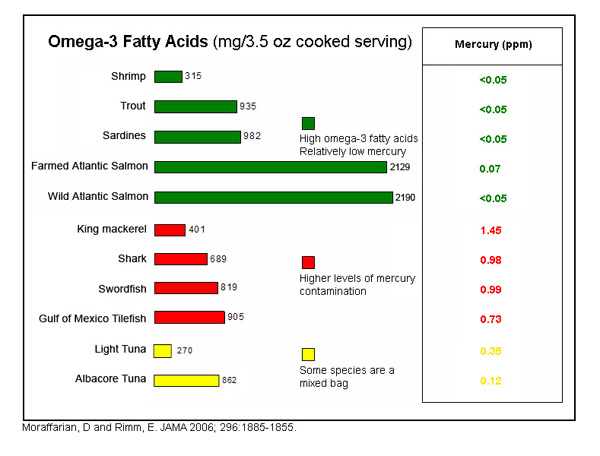
Fatty fish, such as salmon, herring and to a lesser extent tuna, contain the most omega-3 fatty acids and therefore the most benefit, but many types of seafood contain small amounts of omega-3 fatty acids. Most freshwater fish have less omega-3 fatty acids than do fatty saltwater fish though some varieties of freshwater trout have relatively high levels of omega-3 fatty acids.
But many people are still concerned about mercury or other contaminants in fish. However, when it comes to a healthier heart, the benefits of eating fish usually outweigh the possible risks of exposure to contaminants. The main types of toxins in fish are mercury, dioxins and polychlorinated biphenyls (PCBs) and depend on the type of fish and where it's caught. And the risk of getting too much mercury or other contaminants from fish is generally outweighed by the health benefits that omega-3 fatty acids have, say researchers at the Mayo Clinic.
Anyway, not all fish are rich in Omega-3. The main beneficial nutrient appears to be omega-3 fatty acids in fatty fish. Some fish, such as tilapia and catfish, don't appear to be as heart healthy because they contain higher levels of unhealthy fatty acids. Also, some researchers are concerned about eating fish produced on farms as opposed to wild-caught fish. Researchers think antibiotics, pesticides and other chemicals used in raising farmed fish may have harmful effects to people who eat the fish.
Five of the most commonly eaten fish or shellfish that are low in mercury are shrimp, canned light tuna, salmon, pollock, and catfish. Avoid eating shark, swordfish, king Mackerel, or tilefish because they contain high levels of mercury. Check out Fish 101 for amounts of omega-3 fatty acids and mercury levels for the top 10 fish and shellfish in the United States. Also check out frequently asked questions by consumers.
But remember, any fish can be unhealthy depending on how it's prepared. For example, broiling or baking fish is a healthier option than is deep-frying. Choose low-sodium, low-fat seasonings such as spices, herbs, lemon juice and other flavorings in cooking and at the table.
Don’t like fish? Other non-fish food options that contain some omega-3 fatty acids include flaxseed, flaxseed oil, walnuts, canola oil, soybeans and soybean oil. However, similar to supplements, the evidence of heart-healthy benefits from eating these foods isn't as strong as it is from eating fish.
But many people are still concerned about mercury or other contaminants in fish. However, when it comes to a healthier heart, the benefits of eating fish usually outweigh the possible risks of exposure to contaminants. The main types of toxins in fish are mercury, dioxins and polychlorinated biphenyls (PCBs) and depend on the type of fish and where it's caught. And the risk of getting too much mercury or other contaminants from fish is generally outweighed by the health benefits that omega-3 fatty acids have, say researchers at the Mayo Clinic.
Anyway, not all fish are rich in Omega-3. The main beneficial nutrient appears to be omega-3 fatty acids in fatty fish. Some fish, such as tilapia and catfish, don't appear to be as heart healthy because they contain higher levels of unhealthy fatty acids. Also, some researchers are concerned about eating fish produced on farms as opposed to wild-caught fish. Researchers think antibiotics, pesticides and other chemicals used in raising farmed fish may have harmful effects to people who eat the fish.
Five of the most commonly eaten fish or shellfish that are low in mercury are shrimp, canned light tuna, salmon, pollock, and catfish. Avoid eating shark, swordfish, king Mackerel, or tilefish because they contain high levels of mercury. Check out Fish 101 for amounts of omega-3 fatty acids and mercury levels for the top 10 fish and shellfish in the United States. Also check out frequently asked questions by consumers.
But remember, any fish can be unhealthy depending on how it's prepared. For example, broiling or baking fish is a healthier option than is deep-frying. Choose low-sodium, low-fat seasonings such as spices, herbs, lemon juice and other flavorings in cooking and at the table.
Don’t like fish? Other non-fish food options that contain some omega-3 fatty acids include flaxseed, flaxseed oil, walnuts, canola oil, soybeans and soybean oil. However, similar to supplements, the evidence of heart-healthy benefits from eating these foods isn't as strong as it is from eating fish.
