Bookmark and Share
Showing posts with label Artificial Pancreas. Show all posts

Friday, April 22, 2011

Benchmark Cambridge Trial In Quest For Ambulatory Artificial Pancreas

I had reported earlier that once perfected and approved by regulators, safe and robust ambulatory artificial pancreas ‒ or to use the scientific term ‘closed loop insulin delivery system’ ‒ has the potential to greatly improve the health and lives of people with type 1 diabetes. The idea itself is not new but the old generation closed loop insulin delivery systems were cumbersome and unsuitable for long term or outpatient use.
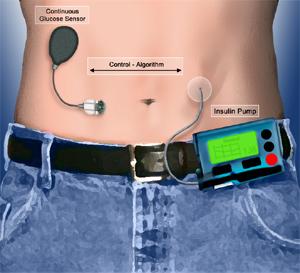
Artificial pancreas concept
The newer systems link a continuous glucose monitor and a subcutaneous insulin infusion pump via a control algorithm, which retrieves continuous glucose monitoring data in real time (for example, every five minutes) and uses a mathematical formula to compute insulin delivery rates that are then transmitted to the insulin pump.

However, artificial pancreas that can be worn by diabetics on their person as they go about their daily lives is still in development, with the first in-clinic studies now being reported. Preliminary results have been promising ‒ the most notable improvement is in overnight control of type 1 diabetes, with improvements in safety and a reduction in nocturnal hypoglycemia being reported.

These improvements result from the fine adjustment of insulin delivery provided by closed loop control overnight being superior to a generally fixed basal rate and less likely to cause hypoglycemia. The first application of closed loop control is therefore likely to be in glucose regulation overnight, a step that has the potential to improve dramatically the safety of insulin delivery during crucial, generally unsupervised, periods.

Now a University of Cambridge research tem led by Roman Hovorka has demonstrated the safety and efficacy of overnight closed loop insulin delivery with conventional insulin pump therapy in adults with type 1 diabetes.


The trial group consisted of 24 adults (10 men and 14 women) aged 18-65, who had used insulin pump therapy for at least three months and the research team used two protocols ‒ a medium sized meal (60 g carbohydrate) and a large size meal (100 g carbohydrate + alcohol) ‒ to see whether artificial pancreas were effective in overcoming nocturnal hypoglycemia.

As in previous studies carried out by Boris Kovatchev and others in the U.S. and France, the Cambridge closed loop system significantly increased the time that plasma glucose was in the target range (70-144 mg/dl), reduced incidence of hypoglycemia, and better overnight control.

But what makes the Cambridge study important is that the randomized crossover trial design is virtually unique in the field of closed loop control. Because this design is the gold standard for clinical research, the results set a benchmark for future studies.

The only other randomized controlled trial of closed loop control was recently presented by the University of Virginia research team led by Kovatchev at the 4th International Conference on Advanced Technologies and Treatments for Diabetes. This study recruited 24 adults and adolescents with type 1 diabetes in the United States and in France and achieved results similar to those reported by Hovorka and colleagues ‒ more time within the target range of 70-180 mg/dl and a threefold reduction in hypoglycemia.
Dr Roman Hovorka

Moreover, the control algorithm used by Hovorka and colleagues belongs to an advanced class of closed loop control technologies known as “model predictive control”. Algorithm designs for artificial pancreas have generally used either “proportional-integral-derivative control” or “model predictive control”.

Proportional-integral-derivative control algorithms are reactive, responding to changes in glucose levels with adjustment in insulin delivery. Model predictive control algorithms are built over a model of the human metabolic system and are therefore proactive, delivering insulin in anticipation of changes in glucose concentrations.

This compensates partially for the time delays inherent in subcutaneous glucose control (the time delay in insulin action, which can amount to 60 minutes or more). For this reason, model predictive control has become the approach of choice more recently.

The algorithm developed by Hovorka and colleagues has certain distinct features, such as real time adaptation of the underlying model to changing patient parameters implemented as a selection from several predefined models. However, this potential advantage remains to be evaluated.

Most importantly, this is one of the first studies to test realistic meal scenarios and challenge the participants with a large dinner that included alcohol. As such, the study is a clear advance in the quest for an artificial pancreas that can be used by a diabetic while performing normal daily activity.

However, as the authors admit, one limitation is the exclusivelymanual control of the artificial pancreas used relied on study personnel to transmit data manually from the continuous glucose monitor (CGM) to the computer running the closed loop control, and to transmit insulin injection recommendations from the computer to the insulin pump because of technological and regulatory barriers

In fully automated systems ‒ which is what researchers and medical device makers are hoping to make a reality for diabetics ‒ these processes are handled by data transmission and pump control devices, respectively. However, Cambridge method limited the investigation to testing only the control algorithm, not the artificial pancreas as a whole. The testing of other key components, such as sensor-pump communication and error mitigation, would require much more effort and thorough system validation.

Studies using fully automated systems have already been reported by the Artificial Pancreas Project and offer hope for the future of ambulatory systems i.e. devices that be worn by diabetics on their person in their daily lives.

Lastly, despite the sophistication of the control algorithm and the significant reduction in nocturnal hypoglycemia, four episodes of severe hypoglycemia (<70 mg/dl) occurred, three of which the authors thought were attributable to the preceding prandial insulin dose and could not be prevented by the artificial pancreas suspending insulin delivery.

This finding reinforces the recently proposed idea that a dedicated hypoglycemia safety system ‒ a separate algorithm responsible solely for the assessment and mitigation of the risk of hypoglycemia ‒ may need to accompany closed loop control. Such safety systems already exist, and have proved useful.

Based on ‘Boris Kovatchev: Closed Loop Control For Type 1 Diabetes (BMJ 2011; 342:d1911)

Friday, April 8, 2011

Diabetes: Artificial Pancreas Best Hope For Diabetics In Near Term

The realization that breakthroughs in biology-based therapies for diabetes are not imminent is spurring tech-based innovation in insulin delivery mechanisms
The days when ‘the only choice open to diabetes sufferers was that between death by coma and death by starvation’ passed unmourned into history in 1922, when insulin was first used therapeutically.

Even today, however, diabetes has lost none of its fearsomeness, because even today diabetics live in constant fear of overdosage or underdosage of their medicines, especially insulin, and of consequent hypoglycemic episodes and late complications that can result from inadequate treatment and prolonged elevation of blood glucose level.
Artificial Pancreas Project concept

Patients with diabetes whose blood glucose levels are kept close to normal by means of suitable therapeutic measures avoid the risk of dangerous hypoglycemic episodes and develop complications of diabetes considerably less frequently and later than their less successfully treated counterparts. But there is realization that breakthroughs in biology-based therapies for diabetes are not imminent. Sure, there is hope that they’re going to happen, but more long-term research is needed.

In the meanwhile, technology that can meet this need is available and is spurring innovation in insulin delivery mechanisms. As a result, diabetes technology, and particularly the artificial pancreas, has become an area of very rapid academic and industrial development.

A precondition for this success is close monitoring of blood glucose levels. Therefore, a great deal of research activity has been directed towards the development of sensors that permit near-painless, continuous measurement of blood glucose level. The objective is to develop a system that pairs continuous blood glucose monitoring with an insulin pump and thus acts as an ‘artificial pancreas’.

Why Continuous Blood Glucose Monitoring Is Desirable
It is difficult to achieve good metabolic control in diabetics. Especially in patients on intensive insulin therapy, good metabolic control calls for frequent blood glucose determinations by patients themselves. The timing and dose of insulin injections have to be adapted to a variety of factors that influence blood glucose level, such as carbohydrate intake, physical exertion, sporting activities, stress (including operations, injuries and infections) and also rest periods such as periods spent asleep.
Insulin Pump

In addition to being painful and unpleasant, individual determinations of blood glucose by patients themselves using the conventional invasive techniques provide no more than a snapshot of the patient’s blood glucose level at the moment the blood sample was taken.

Continuous glucose monitoring (CGM), by contrast, would detect fluctuations in blood glucose level over a prolonged period and indicate when major deviations from the normal range occur. Every diabetic could benefit from continuous monitoring of their blood glucose level.

What Is An Artificial Pancreas?


An artificial pancreas is essentially a device that would both measure sugar levels and dispense appropriate amounts of insulin to keep blood sugar levels in optimal range. It would take much of the guesswork out of daily management of the disease and in the long-run, controlled sugar levels will help to lessen or avert the devastating complications from diabetes.

An artificial pancreas will integrate two currently available technologies ‒ continuous glucose monitors and insulin pumps ‒ with an algorithm that provides the right amount of insulin at the right time. It will enable people with diabetes to achieve tight blood glucose control avoiding both highs and dangerous lows, thereby significantly reducing the risk of the disease's devastating complications.

Why Is An Artificial Pancreas Needed?
The current diabetes treatment market comprises three related but distinct submarkets that address different aspects of the condition. Products in the market are currently comprised of blood glucose monitors, lancets & test strips, continuous blood glucose monitors, insulin, insulin pumps, syringes, and other insulin delivery devices & anti-diabetic drugs. Right now, the most significant growth in the U.S. market is in continuous blood glucose meters, insulin pumps, and anti-diabetic drugs.

An artificial pancreas could potentially revolutionize diabetes care and management, significantly improving the ability of people with diabetes to maintain strict blood glucose control, and ‒ as a direct result ‒ helping reduce kidney disease, heart attacks and stroke, amputations, blindness, and death from severe hypoglycemia.

Extensive research shows that glucose control is the primary factor in avoiding the devastating complications of diabetes. The landmark Diabetes Control and Complications Trial (conducted 1983-1993) showed that intensive diabetes management and improved glycemic control reduces major long-term complications of diabetes.

A later study published in the New England Journal of Medicinefound that intensive diabetes therapy aimed at achieving good control reduced the risk of any heart disease event by 42 percent, and the risk of nonfatal myocardial infarction, stroke, or death from heart disease by 57 percent.

However, clinical research shows that most people with diabetes are not controlling blood glucose levels nearly well enough. The risk of complications ‒ and the economic burden placed on our health care system ‒ could be significantly lowered with devices that improve blood glucose control. And good glucose control will probably enhance the effectiveness of promising new cure therapies such as beta cell regeneration and islet transplantation.

Diabetes Technology To The Rescue
There are several classes of technologies used for diabetes care at home. In general, the devices include monitoring of blood glucose levels and delivery of insulin. The monitoring can happen with finger sticks or with the newer generation of continuous glucose monitoring that permanently attach to the person.

Insulin delivery, the old-fashioned way, is through injections several times a day. The newer devices are insulin pumps. They attach to the person with little needles under the skin that deliver insulin at continuous rates.

But the current problem with even the most advanced treatment of diabetes is that these devices don’t talk to each other. Even the most sophisticated insulin pumps will keep delivering insulin regardless of the blood sugar level of the person because it doesn’t have any information coming from the monitors. That can cause severe reactions.
Dr Boris Kovatchev
Boris Kovatchev, director of the Center for Diabetes Technology at the University of Virginia, has focused on diabetes technology for more than a decade. His contribution to this area is to make these devices talk to each other in a smart fashion, to insert an algorithm that can take the reading from the monitoring device and tell the insulin pump to deliver insulin in a smart way.

The Artificial Pancreas Project is the most advanced application of the device. It connects the most advanced continuous monitoring device to the most advanced insulin pumps available in a continuous fashion — all the time. This is the top of the line integrated technology — and that means continuous monitoring of the person’s blood sugar levels and the reaction to changes.

The system's "smart" algorithm, developed by Kovatchev’s team and collaborators from the University of Padova in Italy, uses existing continuous glucose monitoring and insulin pump technology to automatically regulate a patient's insulin levels, with no action required on behalf of the user. The algorithm is currently being tested in clinical trials at the U-Va. Health System and 10 other centers spanning seven countries.

This project ‒ initiated by the Juvenile Diabetes Research Foundation (JDRF) ‒ has been going on since 2006. Kovatchev’s group was one of the first to join this project. Since then, it has grown significantly. Now, there are government initiatives in several countries and a lot of companies are interested in this technology.

The U-Va group has undertaken some extensive clinical trials on around 60 patients on that system for short periods of time for testing purposes. Besides, there are ongoing clinical trials in eight countries, all using Kovatchev’s patented technology or components of it.

The most challenging aspect of this technology is predicting the future. The reason that the future must be predicted accurately in this particular technology is that insulin delivery under the skin and glucose monitoring under the skin have delays.

“The monitoring of the blood sugar level generally works with a one-hour delay. Imagine you’re driving a car and you’re reacting to oncoming traffic with a one-minute delay. In situations like that, you have outdated data and delayed action. You have to anticipate what is going on in the next hour,” explains Kovatchev.
A device developed by Kovatchev and collaborators to automatically regulate a patient's insulin levels as part of the Artificial Pancreas Project (right) is shown with a continuous glucose monitor (left)

To make his device predict the near future for diabetes management, Kovatchev is developing a class of control strategies called model predictive control. Every human is assigned a mathematical model that mimics the functioning of the metabolic system of that person.

“Based on what that model says, we can predict the future. It’s similar to weather forecasts. But instead of weather models, we have models of a particular human,” he says with confidence.

Saturday, March 19, 2011

NIH Unveils 10-Year New Strategic Plan to Combat Diabetes


A new strategic plan to guide diabetes-related research over the next decade was announced today by the National Institutes of Health. The plan, developed by a federal work group led by the National Institute of Diabetes and Digestive and Kidney Diseases (NIDDK), identifies research opportunities with the greatest potential to benefit the millions of Americans, and ultimately nearly 250 million people worldwide, who are living with or at risk for diabetes and its complications.

"By setting priorities and identifying the most compelling research opportunities, the strategic plan will guide NIH, other federal agencies and the investigative community in efforts to improve diabetes treatments and identify ways to keep more people healthy," said NIDDK Director Griffin P. Rodgers, M.D. in a press release.

The promise of prevention, treatment, and cure for diabetes can only be realized through the vigorous support of scientific research. This research must be conducted through a multi-pronged effort that addresses the complex challenges posed by diabetes, from dysfunctions in the most fundamental molecular and cellular processes, to the need for new approaches to translate scientific findings into improved health for patients, the release states.

The purpose of this research plan - Advances and Emerging Opportunities in Diabetes Research: A Strategic Planning Report of the Diabetes Mellitus Interagency Coordinating Committee (DMICC) - is to serve as a scientific guidepost, identifying compelling opportunities for research on diabetes and its complications over the next decade.

The goal is to accelerate the discovery of: the relationship between obesity and type 2 diabetes, and how both conditions may be affected by genetics and the environment, the autoimmune mechanisms at work in type 1 diabetes, the biology of beta cells, which release insulin in the pancreas, development of artificial pancreas technologies to improve management of blood sugar levels, prevention of complications of diabetes that affect the heart, eyes, kidneys, nervous system, and other organs and the reduction of the impact of diabetes on groups disproportionately affected by diabetes including the elderly and racial and ethnic minorities.

The plan focuses on 10 areas of diabetes research with the most promise. The goal is to accelerate discovery on several fronts, including:
the relationship between obesity and type 2 diabetes, and how both conditions may be affected by genetics and environment
the autoimmune mechanisms at work in type 1 diabetes
the biology of beta cells, which release insulin in the pancreas
development of artificial pancreas technologies to improve management of blood sugar levels
prevention of complications of diabetes that affect the heart, eyes, kidneys, nervous system and other organs
reduction of the impact of diabetes on groups disproportionately affected by the disease, including the elderly and racial and ethnic minorities

Under the plan, NIH will continue to emphasize clinical research in humans, which already has led to highly effective methods for managing diabetes and preventing complications, Rodgers said.

The NIH strategy for fighting diabetes addresses type 1 and type 2 diabetes. Type 1 diabetes, which affects about 5 percent of individuals with diagnosed diabetes, is an autoimmune disease that most often develops during childhood. Type 2 diabetes accounts for 90 to 95 percent of diagnosed diabetes cases in the United States, and is strongly associated with overweight and obesity.

In addition, the plan addresses gestational diabetes, a condition that some women develop during pregnancy, but which usually goes away after their child is born. Women who develop gestational diabetes during pregnancy are at increased risk for developing type 2 diabetes, and the child of that pregnancy may also be at increased risk for obesity and type 2 diabetes.

The NIDDK plans to continue its emphasis on clinical trials in humans, "which already [have] led to highly effective methods for managing diabetes and preventing complications," Rodgers said.

Within each broad area, the strategic plan lists some specific areas of focus.

For instance, in the area of beta cell research, the plan includes five areas: integrated islet physiology, beta cell dysfunction and failure, prevention and treatment of diabetes through restoration and preservation of beta cell function, cellular replacement therapies, and imaging the pancreatic islet.

Obesity is another focus of the plan because of its status as a major risk factor for diabetes.

Areas of interest in obesity include:

Obesity, inflammation, insulin resistance, and macrophage function: "Macrophages and inflammation appear to be activated by excess nutrients and subsequently play a role in eliciting insulin resistance as a consequence of obesity," the report authors noted. "Research is needed to clarify the mechanisms and outcomes of tissue-specific inflammation in obesity."

Mechanisms underlying energy homeostasis: "Untangling the complex networks of hormonal and neural mechanisms that control energy balance in the body could point to new therapeutic targets to prevent or treat obesity," according to the report.

Central nervous system control of thermogenesis: "New technologies are needed to facilitate study of the complex control of energy expenditure and how it contributes to weight maintenance and obesity in people," the authors wrote.

Discovering genetic and intrauterine determinants of obesity susceptibility that predispose people to developing diabetes.

Adipose tissue biology: "Adipose tissue research is key to the development of treatments for obesity and type 2 diabetes," the authors noted. "Understanding the mechanisms that regulate fat cell number, size, distribution, and signaling, and developing new technologies for studying adipose tissues are urgent research goals."

Obesity prevention and treatment: "Behavioral strategies are needed to prevent inappropriate weight gain and promote or maintain weight loss in individuals across the lifespan, as well as in communities or large populations," the authors wrote. "The development and testing of such strategies would be supported by research on the nonbiological determinants of obesity and obesity prevention and the use of technologies to tailor the delivery of interventions to individuals."

Currently, about 1 in 10 adults in the United States has diabetes, according to the Centers for Disease Control and Prevention. About 1.9 million Americans aged 20 years or older were newly diagnosed with diabetes in 2010. In addition, an estimated 79 million American adults have pre-diabetes, a condition in which blood sugar levels are higher than normal but not high enough to be diagnosed as diabetes.

By 2050, as many as 1 in 3 adults could be diagnosed with diabetes if current trends continue, according to the CDC.

The projection assumes that recent increases in new cases of diabetes will continue and people with diabetes will also live longer, which adds to the total number of people with the disease.

Diabetes eventually damages nearly every organ system in the body. People with diabetes are at increased risk for blindness, kidney failure, and lower limb amputation. Overall, the risk for death among people with diabetes is about twice that of people of similar age without diabetes.

In addition, it is a very expensive disease to manage. Total costs of diabetes, including medical care, disability, and premature death, reached an estimated $174 billion in 2007 in the United States.

The plan was developed by the Diabetes Mellitus Interagency Coordinating Committee (DMICC), a congressionally authorized workgroup chaired by the NIDDK. Established in 1974, the DMICC facilitates cooperation, communication, and collaboration on diabetes research across the federal government.

Key elements of the report were identified by multiple public and private stakeholders, including representatives of DMICC member agencies, health advocacy groups and external scientists who are leaders in the diabetes research field.

To ensure broad input, a draft of the strategic plan was also posted for public comment prior to publication. The strategic plan is available electronically here. Printed copies can be requested from the National Diabetes Information Clearinghouse beginning April 1, 2011, at 1-800-860-8747 and by email at ndic@info.niddk.nih.gov. Single copies are free.