Bookmark and Share
Showing posts with label BMI. Show all posts

Sunday, April 3, 2011

Diabetes: Vegetarians Better Off Than Non-Vegetarians On All Counts Including Blood Sugar, Blood Pressure, Waist Size, BMI & Blood Fats

People who follow a vegetarian or meat-free diet may be at a lower risk of developing diabetes and heart disease, a new study suggests. The study of lifestyle habits of more than 700 adults showed researchers that 23 out of every 100 vegetarians have at least three metabolic syndrome factors, compared with 39 out of every 100 non-vegetarians and 37 out of every 100 semi-vegetarians.

The researchers measured a suite of factors ‒ blood sugar, blood fats, blood pressure, waist size, and body mass ‒ that when elevated add up to "metabolic syndrome," and found that vegetarians were lower than non-vegetarians on all counts except cholesterol.

Metabolic syndrome is a combination of health disorders that increase the risk of developing coronary artery disease, stroke, and diabetes. The risk factors include conditions like abdominal obesity, blood fat disorders, elevated blood pressure, insulin resistance or glucose intolerance.

Vegetarianism excludes high-calorie foods and animal products laden with saturated fats. It instead concentrates on foods that give necessary minerals and vitamins that help give diabetics a better chance of blood glucose control. These include whole grains, legumes, fruits and vegetables.


The Vegetarian Pyramid
Vegetarian diets are rich in fiber, which has numerous benefits. When a diabetic eats a fiber-rich meal, the desire for further food disappears. Fiber also plays a protective role for pre-diabetics, and can lead to lower daily requirements of insulin amongst type 1 diabetics.

Fiber is well known as being important in the improving blood sugar control, lowering cholesterol levels and providing folate, thereby reducing the risk of complications like heart disease. Considerable research is available as evidence for the role of fiber in diabetes.

Research has shown vegetarian diets promote a healthy weight since they are often lower in calories than non-vegetarian diets. They also improve blood sugar control and insulin response since eating vegetables, fruits, whole grains, legumes and nuts — features of a vegetarian diet — can improve blood sugar control and make your body more responsive to insulin. Most importantly, a vegetarian diet reduces the risk of cardiovascular disease since it is cholesterol-free, low in saturated fat and usually high in soluble fiber.

The new study ‒ published in the journal Diabetes Care ‒ has confirmed that vegetarians are lower than non-vegetarians on all counts including blood sugar, blood pressure, waist size, body mass index (BMI), and blood fats except cholesterol.

The findings show the vegetarians' average BMI of 25.7 was four points lower than that of non-vegetarians, who, on average, had BMIs close to 30. However, semi-vegetarians fell in the middle. A BMI greater than 25 is considered overweight, and greater than 30 is considered obese. Moreover, the findings suggested that while vegetarians, on average, were 3 years older than the meat-eaters, they were in better shape and health status.

"I was expecting there should be a difference….but I didn't expect that it would be that much," lead researcher Nico Rizzo of Loma Linda University was quoted by Reuters as saying, adding he was not sure what's behind the differences and wondered whether it was primarily the meat intake, the plant food intake or a combination of both.

It's possible that diet is not the cause because the research showed only an association between food choices and health factors, not cause-and-effect. High BMI, for instance, one of the traits that make up the metabolic syndrome profile, itself contributes to high blood pressure, and indirectly, blood sugar, and thereby potentially raising a person's risk of heart disease and diabetes.

One of the shortcomings of the study is that the researchers didn't study the reasons behind the differences between vegetarians and non-vegetarians even though the scientists suggest it may be caused by the meat intake, eating the plant food or a combination of both. The researchers also did not follow the subjects over the long term to see whether those who abstained from meat actually had lower rates of diabetes or heart disease.

The data for this research, which was funded by the National Institutes of Health, came from the Adventist Health Study 2, a long term study of Seventh Day Adventists. This Christian religious group has considerably more vegetarians than the general population.

In this study, 35 percent of the subjects did not eat meat, whereas only about five percent of all Americans are vegetarian. One of the differences Rizzo discovered between the groups was age. Vegetarians, on average, were 3 years older than the meat-eaters. "Even though they're older, they're in better shape," Rizzo said. "That's something I found quite interesting."

Wednesday, March 30, 2011

Diabetes: Implantable Gastric Stimulator May Make Bariatric Surgery Redundant

The DIAMOND System

DIABESITY is the term used to describe the combination of the diabetes and obesity epidemics taking hold across the world and those whose goal it is to prevent even more people developing these conditions state the scale of the problem in no uncertain terms.The word aptly illustrates the close association between weight and diabetes (97 per cent of all cases of Type 2 diabetes are caused by excessive weight) and is a concrete example of the wider cluster of symptoms of a metabolic disorder known as Insulin Resistance Syndrome (also called Metabolic Syndrome X).

Currently undergoing extensive trials, a pacemaker-style device that delivers mild electric pulses to the stomach could be a new way to tackle type-2 diabetes, the most common form of the disease.

The matchbox-sized gadget called DIAMOND (Diabetes Improvement and Metabolic Normalization Device) ‒ a.k.a. TANTALUS™ ‒ is implanted under the skin on the abdomen, stimulates the stomach muscles when the patient is eating.

Studies show this boost in muscle movement causes more insulin ‒ the hormone is responsible for removing excess sugar in the blood ‒ to be released.

Gastric stimulation is based on the fact that electric signals applied to a cell in a certain specific time-period called the refractory period, can modify the cell’s biochemistry and in turn, lead to a change in its behavior.

This tricks brain into thinking more food has entered the stomach than the person has actually eaten. To deal with this supposedly large meal, the brain boosts insulin production as well as triggering the release of hormones that suppress appetite.

This means that the patient feels full much sooner than normal. A wireless charger system allows the patient to recharge the device at home by placing the charger over the abdomen for 45 minutes, once a week.

The result is an improvement in blood glucose levels, which is often accompanied by weight loss, and reduction of blood pressure, waist circumference and blood lipid level.

Recently performed studies have shown that stimulation of the stomach using the DIAMOND system implant can induce satiety and can trigger signaling to the brain, affecting glucose and fatty acid metabolism.

Developed by the Dusseldorf (Germany)-based medical device company MetaCure, DIAMOND is recommended for obese Type 2 Diabetes patients who do not succeed in reducing their HbA1c level below 7 per cent, despite treatment with several oral agents.

Currently, though doctors are prescribing multiple drugs for the majority of patients (called ‘polypharmacy’), it is ineffective in controlling blood sugar in only about two thirds of patients.

Basically, DIAMOND is an advanced minimally invasive implantable electrical stimulator used to apply gastric stimulation. Using innovative technology, the device works by enhancing the activity of the gastric muscles only when the patient eats.

The device automatically senses when a patient is eating, by detecting when the stomach starts to naturally contract, and fires small painless electrical signals into the muscles of the stomach.

DIAMOND is connected by small electrodes to the patient’s stomach. It uses them to automatically sense when the patient is eating, and to send gentle signals to the stomach muscles (and through them to the brain) which enhance the normal satiety feeling.

The DIAMOND system does all this on its own, and the patient does not even feel it working, the manufacturer claims. The rate of the stimulation is dictated by the patient’s natural gastric activity, this makes treatment using the DIAMOND system personalized to each patient’s specific eating habits and physiology, without causing anatomical changes, and without hassle to the patient.

Using a wireless home-based charger system the patient can recharge the Implantable Pulse Generator (IPG) unit simply by placing it over the abdomen for 45 minutes, once a week.

Charging the device assures it has enough energy to provide treatment for years, and minimizes the need for battery replacement. The portable programmer allows medical personnel to adjust the DIAMOND signal parameters according to individual patient needs.

The DIAMOND IPG and electrodes are implanted in a minimally-invasive (laparoscopic) procedure under general anesthesia. The laparoscopic approach ‒ widely used surgical technique used for various procedures such as cholecystectomy ‒ allows for a rapid recovery with minimal discomfort. Patients implanted with DIAMOND are typically able to start eating a few hours after surgery. Hospital stay is usually 1 to 2 days.

The device does not put the patient at risk for hypoglycemia and helps to control your blood sugar levels without the need of adding medications. And unlike bariatric surgery, the procedure does not alter the patient’s physiology, and is completely reversible, allowing the device to be turned off or removed at any point.

Patients living with the DIAMOND system are not limited in their diet and can maintain an active lifestyle (not including contact sports or activities which could damage the implanted system). Maintaining a healthy and balanced diet contributes to the success of the treatment.

The DIAMOND system delivers a gentle stimulation to the stomach during meals. The stimulation corresponds with the body’s natural gastric physiology and rhythm, is safe, and has minimal effect on the patient’s anatomy.

Once implanted, DIAMOND operates automatically requires no activation. There is a need to charge the battery using a portable charger once a week for about 45 min. Charging is wireless, non-invasive and painless, and can easily be done while reading or watching TV.

Over 200 patients are using the DIAMOND system to date, many of them for over two years, and many for over four years. Trials at the Medical University of Vienna showed the device reduced blood glucose levels by a quarter over three months and the DIAMOND has been shown to significantly reduce blood glucose levels and blood pressure levels.

Researchers say small-scale studies also show improvements in blood pressure and cholesterol levels, as well as an average weight reduction of up to 5 kg over a year. Several large-scale trials are now underway in Europe and the U.S. (At the moment, DIAMOND is not available for sale in the USA.)

The DIAMOND system is the first CE-approved (European standard) implanted device for treating Type 2 Diabetes and obesity since 2007. It is currently the only active device that selectively exerts its treatment at the correct physiological context – after meals, and is approved to treat diabetes for periods longer than 12 months.

MetaCure Claims DIAMOND is better that surgical intervention, which is constantly gaining recognition as a treatment for diabetes, with 78 per cent of patients showing resolution of their diabetes post-surgery, and sustaining this status for at least two years. (See my blogpost ‘IDF Endorses Early Bariatric Surgery’ here.)

However, when looking deeper into types of surgery, it seems that reversible “lap-band” procedures are significantly less effective than the more serious gastric bypass surgeries which are irreversible and come with a significant risk to the patient. Till recently, these procedures were prescribed only to the seriously obese patients but now there’s abig push to include patients with a BMI as low as 26.

Besides, despite availability of several classes of pharmacological anti-diabetic agents there is still a clear unmet need for a safe treatment that would comprehensively address the entire metabolic syndrome and will bring about weight loss with minimal requirement for patient compliance.

In the event, DIAMOND presents a significant step forward ‒ on the one hand it is very effective in both weight reduction as well as controlling blood sugar levels (maintaining both the weight and blood sugar effects for long follow-up periods), while on the other hand it is implanted in a minimally invasive, fully reversible implantation procedure – exactly the solution required for the moderate BMI population!

Saturday, March 26, 2011

Diabetes: The Omega-3 Files Revisited


Doctors have long recognized that the unsaturated fats in fish, called omega-3 fatty acids, appear to reduce the risk of dying of heart disease. For many years, the American Heart Association has recommended that people eat fish rich in omega-3 fatty acids at least twice a week.

Now, a Fred Hutchinson Cancer Research Center study on Yup’ik Eskimos living in the remote Yukon Kuskokwim Delta region of southwest Alaska who eat a large amount of fatty fish has again confirmed that a diet high in omega-3 fats may help prevent obesity-related diseases, including diabetes. (See my earlier post 'Omega-3s May Fight Diabetic Retinopathy')

Yup’ik Eskimos have a prevalence of type 2 diabetes of 3.3 percent, versus 7.7 percent in the U.S. overall, even though the Yup’ik Eskimos have overweight/obesity levels similar to the rest of the U.S. (See an earlier CANHR study ‘Metabolic Syndrome in Yup'ik Eskimos’ here.)

Residents of Yup’ik villages joined this research because they were interested in their communities’ health and were particularly concerned about the health effects of moving away from their traditional ways and adopting lifestyle patterns similar to those of residents in the lower 48 states.

Hutchinson researchers working with the Center for Alaska Native Health Research at the University of Alaska-Fairbanks on the study ‒ published online this week in the European Journal of Clinical Nutrition ‒ found the Yup’ik consume 20 times the overall U.S. average of fish and other marine foods, boosting their intake of omega-3 fats. Because of all that fish consumption, this population does not have some of the risk factors normally associated with obesity.

The fats the researchers were interested in measuring were those found in salmon, sardines and other fatty fish: docosahexaenoic acid, or DHA, and eicosapentaenoic acid, or EPA.

“Because Yup’ik Eskimos have a traditional diet that includes large amounts of fatty fish and have a prevalence of overweight or obesity that is similar to that of the general U.S. population, this offered a unique opportunity to study whether omega-3 fats change the association between obesity and chronic disease risk,” said lead author Zeina Makhoul, a postdoctoral researcher in the Cancer Prevention Program of the Hutchinson Center’s Public Health Sciences Division, in a press release.

She said that in the 330 Yup’ik Eskimos (total population 24,000 according to the 2000 U.S. Census) who were studied, 70 percent of whom were obese or overweight, high intakes of omega-3-rich seafood seemed to protect them from some of the harmful effects of obesity. The median age of the participants was 45 and slightly more than half were female. The women were more likely than the men to be heavy, and body mass index (height-to-weight ratio) for all increased with age.

“Interestingly, we found that obese persons with high blood levels of omega-3 fats had triglyceride (a blood lipid abnormality) and CRP (a measure of overall body inflammation) concentrations that did not differ from those of normal-weight persons,” Makhoul said. “It appeared that high intakes of omega-3-rich seafood protected Yup’ik Eskimos from some of the harmful effects of obesity.” High levels of triglycerides and CRP increase the risk of heart disease and, perhaps, diabetes.

“These results mimic those found in populations living in the Lower 48 who have similarly low blood levels of EPA and DHA,” said senior author Alan Kristal, Dr. P.H., a member of the Hutchinson Center’s Public Health Sciences Division. “However, the new finding was that obesity did not increase these risk factors among study participants with high blood levels of omega-3 fats,” he said.

“While genetic, lifestyle and dietary factors may account for this difference,” Makhoul said, “it is reasonable to ask, based on our findings, whether the lower prevalence of diabetes in this population might be attributed, at least in part, to their high consumption of omega-3-rich fish.”

So does that mean you should you load up on fish oil supplements? Not so fast, Makhoul cautions, as more studies need to be done to find out if there's something else going on with the Yup'iks. "They have a pretty unique lifestyle and of course genetics could play a role," she points out.

Nonetheless, it's still a good idea to follow the American Heart Association recommendations and include more fish in your diet, at least two servings a week. Fish contain unsaturated fatty acids, which, when substituted for saturated fatty acids such as those in meat, may lower your cholesterol. Omega-3 fatty acids are a type of unsaturated fatty acid that's thought to reduce inflammation throughout the body.

Inflammation in the body can damage your blood vessels and lead to heart disease. And as the Hutchinson study shows, Omega-3 fatty acids decrease triglycerides. Besides, Omega-3s also lower blood pressure, reduce blood clotting, boost immunity and improve arthritis symptoms, and in children may improve learning ability.


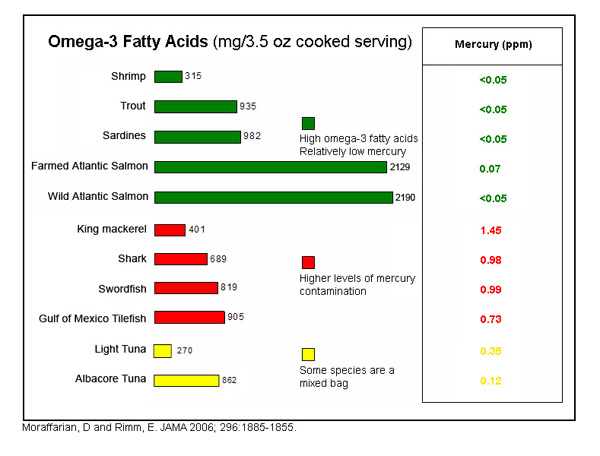
Fatty fish, such as salmon, herring and to a lesser extent tuna, contain the most omega-3 fatty acids and therefore the most benefit, but many types of seafood contain small amounts of omega-3 fatty acids. Most freshwater fish have less omega-3 fatty acids than do fatty saltwater fish though some varieties of freshwater trout have relatively high levels of omega-3 fatty acids.

But many people are still concerned about mercury or other contaminants in fish. However, when it comes to a healthier heart, the benefits of eating fish usually outweigh the possible risks of exposure to contaminants. The main types of toxins in fish are mercury, dioxins and polychlorinated biphenyls (PCBs) and depend on the type of fish and where it's caught. And the risk of getting too much mercury or other contaminants from fish is generally outweighed by the health benefits that omega-3 fatty acids have, say researchers at the Mayo Clinic.

Anyway, not all fish are rich in Omega-3. The main beneficial nutrient appears to be omega-3 fatty acids in fatty fish. Some fish, such as tilapia and catfish, don't appear to be as heart healthy because they contain higher levels of unhealthy fatty acids. Also, some researchers are concerned about eating fish produced on farms as opposed to wild-caught fish. Researchers think antibiotics, pesticides and other chemicals used in raising farmed fish may have harmful effects to people who eat the fish.

Five of the most commonly eaten fish or shellfish that are low in mercury are shrimp, canned light tuna, salmon, pollock, and catfish. Avoid eating shark, swordfish, king Mackerel, or tilefish because they contain high levels of mercury. Check out Fish 101 for amounts of omega-3 fatty acids and mercury levels for the top 10 fish and shellfish in the United States. Also check out frequently asked questions by consumers.

But remember, any fish can be unhealthy depending on how it's prepared. For example, broiling or baking fish is a healthier option than is deep-frying. Choose low-sodium, low-fat seasonings such as spices, herbs, lemon juice and other flavorings in cooking and at the table.

Don’t like fish? Other non-fish food options that contain some omega-3 fatty acids include flaxseed, flaxseed oil, walnuts, canola oil, soybeans and soybean oil. However, similar to supplements, the evidence of heart-healthy benefits from eating these foods isn't as strong as it is from eating fish.

Sunday, February 6, 2011

How Tiny Nauru Became World's Fattest Nation


The world is facing a "population emergency" as soaring rates of obesity threaten a pandemic ofcardiovascular disease, scientists have warned.

The spread of Western fast food was blamed as the tiny Pacific nation of Nauru was named as the fattest in the world. Its average Body Mass Index is between 34 and 35, 70 per cent higher than in some countries in South-east Asia and sub-Saharan Africa.

More than one in 10 of the world's population is obese – more than half a billion adults – and rates have doubled since 1980. The biggest increases are in the richer nations but almost every country has seen rates rise.

Only Bangladesh, the Democratic Republic of Congo and a few countries in sub-Saharan Africa and east and south Asia have escaped the rise. Yet even in these regions neighbouring countries have had widely differeing experiences. The women of Southern Africa are among the fattest in the world.

The rise is being driven by increasing urbanisation, the growth of sedentary, office-based lifestyles and the substitution of Western-style fast foods for traditional diets. Researchers from Imperial CollegeLondon and McMaster University in Canada, writing in The Lancet, describe it as a "tsunami of obesity that will eventually affect all regions of the world".

In its wake comes an epidemic of heart disease and stroke, linked with high blood pressure and raised cholesterol levels. Remarkably, high-income countries such as the US and UK have managed to avoid this, by reducing blood pressure and cholesterol with drugs and dietary changes, such as reducing salt and fats. Smoking too, one of the key causes of heart disease, has fallen. (Japan is an exception where historically low cholesterol levels, associated with the nation's high consumption of fish, have risen to levels seen in western Europe, as the Japanese adopt a Western diet.)

But in middle and low-income countries the outlook is "dismal". "Considering all risk-factor trends together, the forecast for cardiovascular disease burden... comprises a population emergency that will cost tens of millions of preventable deaths, unless rapid and widespread actions are taken by governments and health care systems woldwide," the researchers say.

Treating the consequences of the obesity explosion with drugs will create an "unsustainable financial burden" in these countries and there is an "urgent need" to understand why unhealthy behaviours are adopted by both individuals and communities.

With an increasing trend towards globalisation and urbanisation, the problem is likely to get worse rather than better. "Ironically the economic growth of low-income and middle- income countries is now threated by the projected cardiovascular disease epidemic," they say.

Citing the noted British epidemiologist Geoffrey Rose, the authors say: "Mass disease and mass exposures require mass remedies. Mass remedies require the masses to be part of the solution."

The world obesity map
Fastest growing: US
The US saw the biggest rise in BMI of all developed nations between 1980 and 2008, more than 1kg a decade. Increasingly sedentary occupations, less walking and cycling, more driving in cars and rising consumption of fast foods and sugary drinks are behind the rise which affects all high-income countries.

Slimming down: Italy
Italy is the only high-income country in Europe where BMI declined - for women, from 25.2 to 24.8. Even among men, Italy saw one of the smallest increases. The classic Mediterranean diet - pasta, vegetables and fruit - is one of the healthiest in the world.

Fattening up: UK
The UK has the sixth highest BMI in Europe for women and the ninth highest for men (both around 27). The rate of increase has been second only to the US for men. One in four men and one in three women is overweight and about 12 million are obese.

South America's biggest: Chile
Chile with an average BMI of 27.0 for men and 27.9 for women, was the heaviest country in southern Latin America. The scale of increase in obesity in southern Latin America is second only to the US among men and ranks fifth among women. Rates of obesity soared in Chile with the end of its dictatorship in 1990 and a surge in fast food restaurants and some critics are now calling for a junk food tax to be imposed.

World's thinnest: Bangladesh
Bangladesh is the world's thinnest nation, with an average BMI of 20.5 for women and 20.4 for men. Rice is the staple diet and millions go without enough to eat. More than half of children - more than 9 million - are underweight and have stunted growth.

Fattest on earth: Nauru
Nauru is the world's fattest country, with an average BMI of 34 to 35. Located in the south Pacific it is the smallest island nation, with a population of less than 10,000. Obesity has grown as a result of the importation of Western foods paid for with proceeds from phosphate mining. The most popular dish is fried chicken and cola.

And here are the top ten overweight countries along with the percentages of their populations who are overweight: 
10. Kiribati - 73.6%
9. United States of America- 74.1%
8. Kuwait - 74.2%
7. Palau - 78.4%
6. Samoa - 80.4%
5. Niue - 81.7%
4. Tonga - 90.8%
3. Cook Islands - 90.9%
2. Federated States of Micronesia - 91.1%
1. Nauru - 94.5%

From The Independent

Friday, August 13, 2010

Brain Surgery Could Treat Diabetes

Chronicling an unusual approach to the treatment of type 2 diabetes, a small study of 10 patients by Allegheny General Hospital physicians led by neurosurgeon Peter Jannetta suggests that a type of brain surgery can lead to improvement in the onset and progression of the disease.

The study about the effects of surgery to decompress an artery pressing on the medulla oblongata was published on August 12 in the journal Surgical Neurology International. Dr. Jannetta is known for his work developing the surgery, called microvascular decompression. In the surgery, the artery is repositioned and a protective pad is placed between it and the nerve.

The medulla oblongata is responsible for, among other things, function of the pancreas, which is involved in the production of insulin. Type 2 diabetes is characterized by a resistance to insulin, which helps the body effectively use glucose for energy.

Dr. Jannetta noted that an earlier group of 15 of his patients had both type 2 diabetes and what was considered unrelated cranial nerve disease. They were given the decompression surgery. Reviewing results, he noted that nine of them had improved diabetes symptoms.

He hypothesized that the nerve compression affected the pancreas and surgery could mitigate the disease. He enrolled 10 diabetes patients for the followup study. All 10 patients had both steadily progressive type 2 diabetes and compression in the medulla, which had been detected through MRI scans. They underwent the decompression surgery in 1997-99 and were followed for a year, during which time they were not permitted to make any changes in diet, weight or activity.

Seven of the 10 showed significant improvement in their glucose control and decreased medication dosages. One patient went off medication altogether.
The study's endocrinologist noted that the three who did not improve had higher body mass indexes, falling into the obese category. The other seven had BMIs in the overweight class.

Dr. Jannetta's group is embarking on a larger study in partnership with the University of Minnesota and the University of Toronto. Prospective study subjects are undergoing MRI scans.

The research drew criticism from at least one diabetes expert. "It sounds very farfetched to me," said Vijay Bahl, chief of endocrinology and metabolism at UPMC Shadyside. "We know the brain controls blood sugar ... and other neurotransmitters like dopamine ... but the decompression of a blood vessel (as a treatment) just doesn't sound real."

An accompanying editorial in the medical journal called for further investigation into the connection between the brain condition and diabetes.

Pohala Smith/Pittsburgh Post-Gazette